AI for Business Process Optimization and Efficiency
Md Sharif Foysal Shoron
Author
Business process optimization has always been a priority for organizations seeking to improve efficiency, reduce costs, and maintain competitiveness. Traditional optimization efforts rely on manual analysis, static workflows, and incremental improvements. While effective to a degree, these methods struggle to keep pace with growing complexity and dynamic operating environments.
Artificial intelligence introduces a new paradigm for process optimization. By analyzing large volumes of operational data, AI identifies inefficiencies, predicts bottlenecks, and recommends improvements continuously. This enables organizations to move beyond reactive optimization toward intelligent, adaptive operations.
Understanding Business Process Optimization
Business processes represent sequences of activities that deliver value to customers or support internal operations. These processes often span departments, systems, and stakeholders.
Traditional optimization focuses on mapping workflows and eliminating obvious inefficiencies. AI enhances this approach by uncovering hidden patterns and correlations that manual analysis cannot detect.
How AI Identifies Process Inefficiencies
AI models analyze execution data such as timestamps, error rates, and outcomes across thousands or millions of process instances. This allows detection of recurring delays, unnecessary steps, and performance variations.
Instead of relying on assumptions, AI provides evidence-based insights into where and why processes underperform.
Automating Decision Points in Processes
Many business processes include decision points that require judgment or classification. AI automates these decisions by learning from historical outcomes and applying consistent logic at scale.
Process Optimization Across Key Business Functions
In operations, AI optimizes inventory management, scheduling, and resource allocation. In finance, AI improves invoice processing, fraud detection, and cash flow management.
Human resources teams use AI to streamline recruitment, onboarding, and performance analysis. Customer-facing processes benefit from faster response times and improved accuracy.
Continuous Improvement Through Learning Systems
AI-driven process optimization is continuous rather than static. As processes evolve, AI systems adapt automatically, ensuring optimization remains effective over time.
Backend Infrastructure for Process Intelligence
Reliable backend systems are essential for collecting and processing process data. Frameworks like Django support scalable APIs, background tasks, and secure data handling.
Balancing Automation with Human Oversight
Not all decisions should be automated. AI systems must include mechanisms for human review, especially for high-impact or sensitive processes.
Measuring Efficiency Gains and ROI
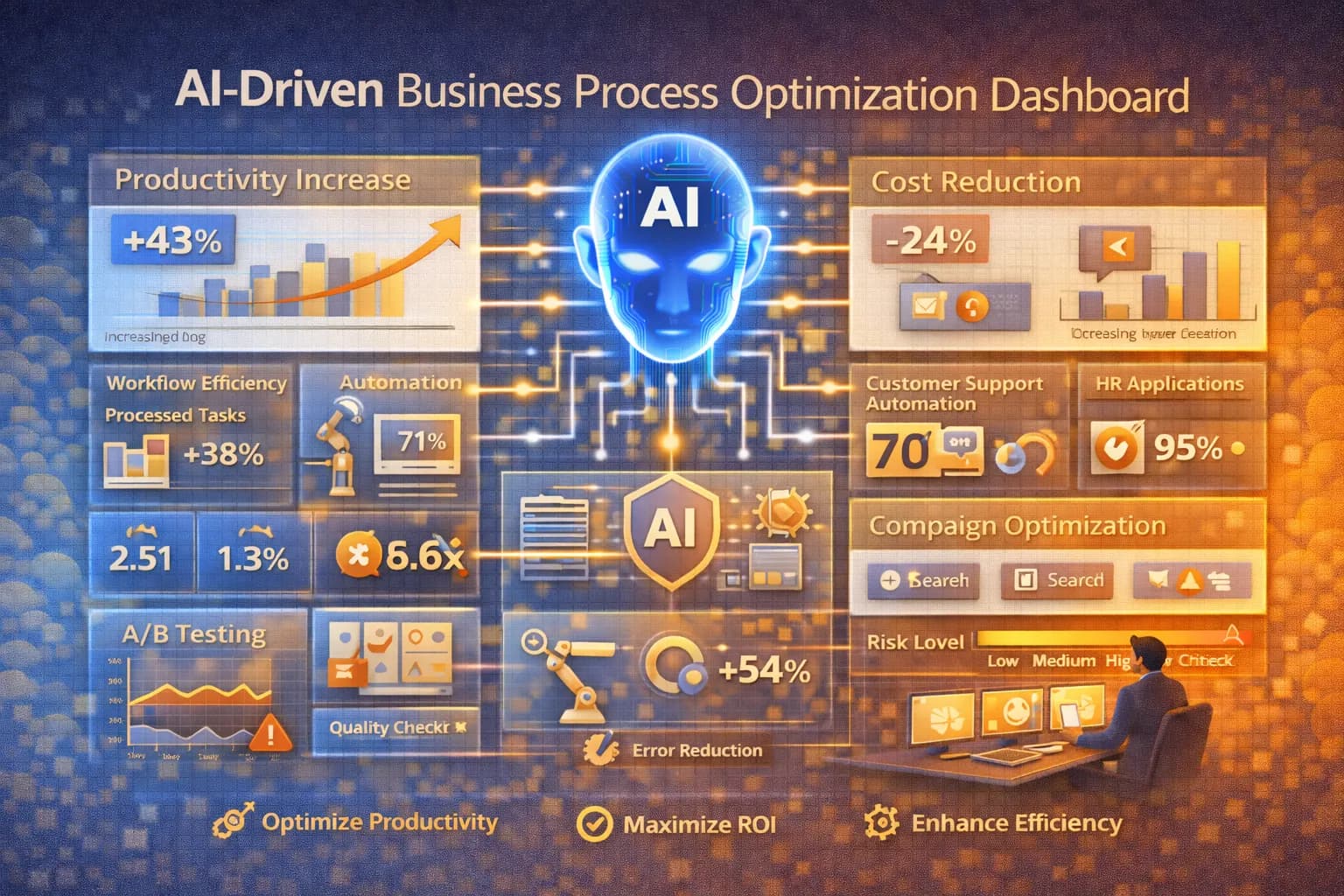
AI-driven optimization should be measured through metrics such as cycle time reduction, error rates, cost savings, and throughput improvements.
Long-Term Benefits of AI Process Optimization
Over time, AI optimization enables scalable growth, operational resilience, and continuous performance improvement without proportional increases in cost.
How Square Tech IT Optimizes Business Processes with AI
At Square Tech IT, we design AI-powered process optimization systems that integrate seamlessly with existing operations. Our solutions focus on measurable efficiency gains, scalability, and long-term sustainability.